Selling a Riverside County car that won't start, took flood damage or lost its converter
You can sell a car in Riverside County whether it runs or not, and the California rules barely move with its condition: the seller still owes the buyer a smog certificate unless the car is exempt or going to be dismantled, and serious damage can put a brand on the title. This page covers cars that will not start or overheated, paint and dashboards baked by inland sun, flood or fire damage and the Salvaged brand, a stolen catalytic converter, and open recalls, with the DMV's and BAR's own words where they settle the question.
Sources re-checked .
Short answer
Yes. A car that does not run can still be sold in Riverside County, but California's smog rule does not bend for a dead engine: the seller owes a certificate unless the car is exempt by age, fuel or family, or is going to be dismantled. Damage can also put a Salvaged brand on the title, and a parked dead car has a legal time limit.
BAR: Smog Check, when you need one; DMV manual: junking a vehicle (individual)
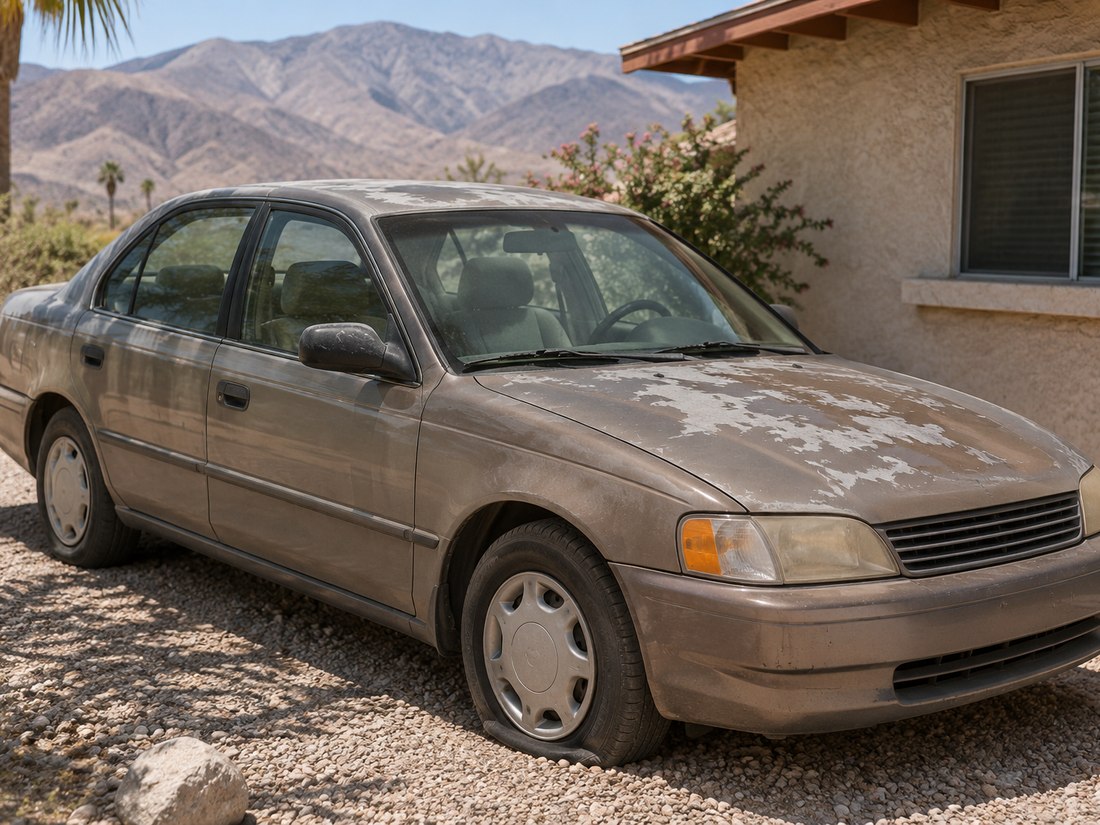
A car that won't start still needs a smog answer
California has no smog exemption for a car that will not run. BAR says a Smog Check is required before you sell, and the DMV says the seller gives the new owner a valid smog certification at the sale. The exceptions turn on model year, fuel and family. Gasoline, hybrid and alternative-fuel cars four model years old or newer skip the sale inspection, and the DMV collects a smog transfer fee instead. Diesels get no such newer-car break.
So a seller whose car cannot reach a station has three paths:
- Get it running well enough to test. BAR says a car will not pass with the check engine light on, and after a new or disconnected battery it tells owners to drive the car for a week or two so the readiness monitors reset. A station can also turn a car away: "A station may also refuse to inspect your vehicle if it determines that it is unsafe." BAR points those owners to the Smog Check Referee.
- Sell it for parts or scrap. The DMV's registration manual lifts the smog inspection for a car transferred to be wrecked or dismantled as junk. The junk car guide covers that route in Riverside County.
- Say plainly where the smog stands. Whether you list it privately or send a request, write that it has no smog test because it will not run, so the question is settled before the paperwork.
A passing certificate stays valid for 90 days, so test close to the sale, not months ahead.
Source: BAR: Smog Check, when you need one; DMV: smog inspections; DMV manual: junking a vehicle (individual).
How long a dead car can sit while you sell it
A car that will not start often waits in the driveway while the sale comes together, and that wait has a legal limit. On unincorporated county land, Ordinance 520 bars leaving a wrecked, dismantled or inoperative car on private or public property for more than 10 days, unless it is completely enclosed in a building and out of view from the street.
Some cities are stricter than the county:
- Menifee. Its police code FAQ makes it an infraction to leave an inoperative vehicle on private or public property in the city "for a period in excess of 72 or more consecutive hours" unless it is fully enclosed and out of sight (code 12.01.150).
- Moreno Valley. The city says wrecked, dismantled or inoperative vehicles may not be parked in public view, even on private property.
- Lake Elsinore. Inoperative or wrecked vehicles must be stored inside an enclosed building or taken off the property.
A dead car in an open driveway can draw a code complaint before it sells. To start the sale from where it sits, send a request on the request page that says whether it cranks, whether it starts, whether it overheated or the engine is locked, which parts are gone, and what the title shows, or call (951) 404-1640 and describe it; a person from Sell My Car Riverside County calls back.
Source: Riverside County Ordinance 520; Menifee Police: code enforcement FAQ; Moreno Valley: parking codes; Lake Elsinore: property maintenance.
Sun-faded paint, cracked dashboards and heat-aged tires
Peeling clear coat, a split dashboard, a sagging headliner and brittle trim are what inland and desert sun leaves on a car parked outside for years. None of it changes what California asks of a seller; it changes what you describe:
- Hold off on paint, a dash cover or a detail until you know what the car brings as it is.
- Name the sun damage plainly in a private listing or in a request on the request page: peeling roof clear coat, a cracked dash, a loose headliner. Daylight photos of the washed car show it as it is.
- Look at the tire sidewalls. Fine cracks in the rubber show age even when the tread looks deep. If you plan to drive the car to a smog station or to meet a private buyer, have a tire shop look first.
- A weak battery that sits in summer heat may be dead by the day the car changes hands. If the car runs, start it the day before. If it does not, say so up front.
- Clear the car before it leaves: sunshades, garage remotes, papers in the visor and glovebox, and any switchable toll transponder. A FasTrak sticker cannot move to another car, so deactivate it in your 91 or 15 Express Lanes account; after you sell has the steps.
Source: 91 Express Lanes: FAQs; Riverside Express: 15 Express FAQs.
Flood or fire damage and California's Salvaged brand
Of the seven brands the DMV lists for California titles, Salvaged is the one tied to damage. The DMV says a car carries it when it was in an accident or "incurred considerable damage from another source, such as a flood or vandalism." California has no separate flood brand and no rebuilt brand. The brand prints in a red box marked VEHICLE HISTORY near the upper right corner of the title.
The salvage certificate comes in at a total loss. In the DMV's definitions, a total loss salvage vehicle was wrecked, destroyed or damaged so badly that the owner or the insurer considers it uneconomical to repair. The salvage certificate then replaces the title as the ownership document. If your insurer settles a flood or fire claim as a total loss and you keep the car, the DMV manual says the insurer must tell you that you have 10 days from the settlement to apply for a salvage certificate. The application form is REG 488C.
Whatever the paperwork shows, tell the buyer the car was flooded or burned. If you send a request on the request page, say what the water or fire reached, whether the insurer paid it as a total loss, and whether the title now reads Salvaged. Read the salvage and revived salvage guide before you sell a branded car.
Source: DMV: branded titles; DMV manual: salvage certificate; DMV manual: salvage definitions; DMV manual: notice of retention by owner.
A stolen catalytic converter and the smog certificate
BAR keeps a page on converter theft. For an owner whose converter is gone, its advice is to take the car to a licensed Smog Check station for the replacement. The part must come from the original manufacturer or be a CARB-approved aftermarket converter with an Executive Order number that fits your exact vehicle. BAR says the replacement "must be installed before your vehicle's next Smog Check." Its Consumer Assistance Program does not pay to replace a stolen converter, so check whether your own policy covers stolen parts.
BAR's Smog Check Reference Guide counts any emission control part that is missing, modified or disconnected as tampered. The same guide rules out a repair cost waiver for a tampered car until it is repaired, and for any car that is undergoing a transfer of ownership. You have two clean choices:
- Have a licensed station fit the correct replacement, pass the Smog Check, and sell inside the certificate's 90 days.
- Sell it as it is and say the converter is missing, in a private listing or in a request on the request page. Your smog duty as the seller still stands, so settle the certificate before the title is signed.
If the car is headed to a dismantler, the DMV's junk exemption described above applies instead. More on failed tests is on the smog check page.
Source: BAR: catalytic converter theft; BAR: Smog Check Reference Guide (PDF); BAR: Smog Check, when you need one.
Open recalls: check the VIN before you list
An open safety recall matters to whoever drives the car next. Enter the VIN at nhtsa.gov/recalls before you list the car or send a request. If you have the car smog-checked for the sale, BAR says the vehicle inspection report also identifies open safety recalls, so the report you hand the buyer may name them anyway.
If a recall is open, call a dealer for that make and ask about the repair before the sale. If you sell first, name the open recall in your description so the buyer hears it from you.
Source: NHTSA: recalls lookup; BAR: Smog Check, when you need one.
Questions about selling a car in rough shape
Do I need a smog check to sell a car in Riverside County that does not run?
Usually yes. California's smog exemptions turn on age, fuel and family ties, not on whether the engine runs. The DMV does exempt a car transferred to be wrecked or dismantled, so a sale for scrap skips the inspection. For any other sale, plan on a certificate or ask the buyer what it needs. See the DMV junking rules.
Will the state help pay to replace a stolen catalytic converter?
No. BAR says its Consumer Assistance Program does not cover replacing a stolen converter, so check whether your auto policy covers stolen parts. If you replace it, use a licensed Smog Check station and an original or CARB-approved part with an Executive Order number for your car, as BAR's converter theft page explains.
Pick the page that fits your car
If the car is headed for scrap, the junk car guide covers dismantlers, the DMV Junk Receipt and county rules on inoperable cars. If it needs a passing test first, start with the smog check guide. To talk through a car that won't start, a flood-damaged car or one missing its converter with Sell My Car Riverside County, call (951) 404-1640.
More on selling a car in Riverside County
- PaperworkThe California title lines a Riverside County seller signs, when REG 227, REG 262 and REG 135 apply, the 2011 mileage rule, and the county's ten DMV offices.
- Release of liabilityHow to file California's release of liability after a Riverside County sale: the 5-day deadline, online or REG 138, proof to keep, and answering tickets and toll notices.
- Smog checkWho must get the smog check before a Riverside County car sale, the 90-day window, the exemptions BAR and the DMV list, the $8 fee, and what to do when the car fails.
- Title problemsLost title, a lender still listed, an owner who died, or AND versus OR co-owners: the California forms and signatures a Riverside County seller needs first.
- Junk carThe four ways to get rid of a junk car in Riverside County, the county's 10-day rule, free county and Lake Elsinore removal, and the DMV Junk Receipt.
- Car retirementBAR's CAP pays $1,350, $1,500 or $2,000 to retire a drivable car: who qualifies, the Thousand Palms dismantler in Riverside County, and when a sale pays more.